-
LatestThe best Washer of 2026
-
 BLACK+DECKER BFLW45M Roomy, efficient front-load washer with practical everyday cycles.
-
 Miele WQ 1000 WPS Nova Premium, feature-rich washer built for convenient everyday laundry.
-
 Miele WWB 380 WCS PowerWash & Steam Premium washer offers efficient cleaning and fabric care.
-
 AEG LR639AD44 6000-serie ProSense Autodose Convenient 9kg washer with automatic dosing and sensing
-
 Siemens WM14N208NL Practical 8kg washer with dependable everyday cycles.
-
 Bosch WAN2827FNL Practical, efficient 8 kg washer for everyday family laundry.
-
-
LatestThe best Washer of 2026
-
 Kapas KPS35-735H2 Compact twin-tub washer for small, hands-on laundry loads.
-
 Comfee CLV09N1AMG Compact washer makes small-apartment laundry convenient.
-
 Giantex EP23113 12 Lbs Compact twin-tub washer for convenient small-space laundry
-
 Midea MLTW09M1BWW washer Compact laundry for apartments and small everyday loads
-
 BLACK+DECKER BPWM09W, 0.9 Cu. Ft. , 6.6 lb. Compact portable washer for small everyday laundry loads
-
-
LatestThe best Dryer of 2026
-
 Miele TED 648 WP EcoSpeed & Wash2Dry Efficient, gentle drying with convenient smart washer pairing.
-
 BLACK+DECKER 4.4 Cu. BDFH44M Compact vented dryer for everyday small-home laundry
-
 BLACK+DECKER 8.0 Cu. BFLD80ME Roomy electric dryer for everyday family laundry.
-
 BLACK+DECKER BCED26 Compact Dryer Space-saving vented drying for small everyday laundry loads.
-
 AEG TR73CB96 SensiDry Gentle, efficient drying with generous family-sized capacity.
-
 AEG TR969M6C AbsoluteCare Plus Gentle, efficient drying for mixed loads and bedding
-
-
LatestThe best Washer-Dryer of 2026
-
 Bosch WNC254A0 Serie 8 Large-capacity washer-dryer with smart features and convenient automatic dosing
-
 Bosch WNA13400NL Space-saving washer-dryer for everyday laundry, smaller drying capacity.
-
 AEG LWR7586CUB DualSense UniversalDose Space-saving washer-dryer with fabric care and pod-friendly dispensing
-
 Bosch WNG254A7NL Spacious washer-dryer convenience, with a modest drying capacity.
-
 AEG LWR9516BN4 9000 Serie SensiDry Space-saving washer-dryer with gentle heat-pump fabric care
-
 Whirlpool FFWDB 964369 WV EE Space-saving washer-dryer with generous washing capacity and quick cycles.
-
Bosch WTU87675NL review
Review the Bosch WTU87675NL 8 kg heat-pump dryer, with details on drying performance, programs, energy use, running costs and everyday pros and cons.


 2024-12-09
Summary / TL;DR

The Bosch WTU87675NL is an 8 kg heat-pump tumble dryer suited to everyday laundry in a small or medium-sized household. Its AutoDry sensors adjust cycle duration to the remaining moisture, while programs cover common fabrics, towels, sportswear and down items. The heat-pump system is designed to use less electricity than conventional vented dryers, and the self-cleaning condenser helps reduce maintenance. However, cycles can take longer, particularly with full or very damp loads, so it may not suit households needing fast turnaround. The full-size cabinet requires careful measurement before installation, and a stacking kit may need to be purchased separately. Overall, it offers practical fabric-care and energy-saving features, with slower drying as the main trade-off.
If you like this review, you might also like our review on the Bosch WQB245A5NL or Bosch WQG233D1NL or Bosch WTH85205NL.
Introduction
The Bosch WTU87675NL is a Serie 6 heat-pump tumble dryer with an 8 kg capacity, aimed at households that want to dry a full wash without adding an external vent. That size works well for a couple or small family: a load of towels, everyday clothes and a few lighter items can usually go in together, rather than needing several small cycles.
Heat-pump dryers reuse warm air instead of simply sending it outside, which makes them a popular choice for homes where keeping running costs in check matters. They do tend to take longer than traditional vented dryers, so this Bosch is better suited to people who can plan around a cycle than anyone needing laundry dried in a hurry. In the sections below, we’ll look at how it handles everyday loads, what its features add, and whether it makes sense for your home.
Related reviews


Design and Build Quality
The Bosch WTU87675NL keeps its looks simple: a white cabinet, a front-loading door and a control panel that doesn’t crowd the front. That plain finish is easy to match with a washer, and it won’t make a small laundry room feel busier than it needs to.
Size and everyday fit
At about 84.2 cm high, 59.8 cm wide and 61.3 cm deep, it follows the familiar full-size dryer footprint. Measure the route into the room as well as the space where it will sit; doorways, skirting boards and hoses can make a tight installation trickier than the listed dimensions suggest. Leave enough room in front to open the door fully and pull out a laundry basket.
Cabinet and drum
Bosch uses an AntiVibration design on the side panels to help limit movement and noise during operation. It’s a useful detail if the dryer sits beside a washer, though a level floor and properly adjusted feet still matter—an uneven machine can wobble even with vibration-damping panels. Inside, the stainless-steel drum gives clothes a smooth surface to tumble against, while the broad door opening makes it easier to load bulky items such as bedding.
The cabinet feels practical rather than decorative. Its straightforward controls and uncluttered front are easy to live with, but the white finish can show scuffs or dirt more readily than a darker appliance. Overall, the WTU87675NL has the neat, conventional build that suits a utility room, with dimensions worth checking carefully before you buy.
Drying Performance
The 8 kg capacity gives this heat pump dryer room for a typical family load of towels or everyday clothes without packing the drum tight. That matters for drying results: a full load needs space to tumble, and cramming in one more bath sheet can leave thick hems damp after lighter items feel ready.
AutoDry moisture sensors check how much moisture remains in the laundry and stop the cycle once it reaches the selected dryness level. This helps avoid the familiar problem of shirts coming out hotter and drier than they need to be. For a mixed load, though, a heavy pair of jeans or a hoodie can take longer than T-shirts; drying similar fabrics together usually gives more even results.
The drum’s gentle movement is a good fit for regular clothing, while the lower-temperature drying used by heat pump dryers is kinder to fabrics than very hot air. Bulky items still need a little attention: shake out a duvet or large towel before drying, and check its thick folds afterwards. They can hold moisture even when the outside feels dry.
Cycle times can be longer than those of a conventional high-heat dryer, especially with a large or very wet load. That’s a trade-off rather than a drying flaw, but it’s worth planning around if you need a load finished quickly. For everyday laundry, the combination of sensor-controlled drying and generous capacity should make it easier to get clothes dry without routinely overdrying them.
Programs and Features
The Bosch WTU87675NL has a useful spread of heat pump dryer programs for everyday laundry, plus a few handy options for awkward loads. AutoDry uses sensors to track moisture and temperature, then stops the cycle when clothes reach the selected dryness level. That’s useful for a mixed load: a cotton T-shirt and a thicker sweatshirt won’t necessarily need the same amount of time.
Programs for everyday loads
You can choose dedicated cycles for cottons, easy-care fabrics, mixed laundry and towels. There are also programs for sportswear and down items, along with a wool finish cycle designed to refresh woollens rather than wash them. For a small load that needs to be ready soon, Super 40 is the quick option; it’s best suited to a modest amount of laundry, not a full basket of damp jeans.
The timed warm and cold programs give you more control when a sensor cycle isn’t quite the right fit. For example, a short warm cycle can finish off clothes that are nearly dry, while a cold timed cycle is handy for airing garments that have been sitting in a cupboard.
Useful settings, without a learning curve
Options include reduced creasing, gentle drying and a half-load setting. The half-load option is particularly practical after washing a few work shirts rather than waiting to fill the drum. The Sensitive Drying System also uses a shaped drum and carefully circulated warm air to handle clothes more gently than a simple heated tumble.
There’s no need to rely on one preset for every load: you can adjust the dryness level to suit how you plan to use the clothes. Choose a cupboard-dry setting for items going straight away, or a slightly damp setting for shirts you intend to iron. The controls on the Bosch WTU87675NL are straightforward, though buyers wanting app-based controls should check carefully before purchasing; this model’s main appeal is its practical programs and direct, on-machine settings.
Energy Efficiency and Running Costs
The Bosch WTU87675NL’s heat-pump system is designed to use less electricity than a traditional vented or condenser dryer. It reuses warm air instead of constantly heating fresh air, which helps keep the cost of drying a regular load down. Its older EU energy label rates it A++ and lists annual consumption at about 235 kWh, based on a standard test schedule of 160 cycles.
| Example calculation | Estimated cost |
|---|---|
| One standard cycle, using about 1.47 kWh | About €0.44 at €0.30 per kWh |
| 160 cycles, using about 235 kWh | About €70.50 a year at €0.30 per kWh |
These are estimates, not a promise of what your electricity bill will show. A half-full load can use less than a full one, while extra-damp laundry or repeated cycles can push consumption up. The dryer also takes longer than many older, less efficient models, so it suits households that can leave a load running rather than needing clothes dried in a hurry.
The self-cleaning condenser helps limit the build-up of lint that can make a dryer work harder over time. You’ll still need to clean the lint filter regularly; skipping it can restrict airflow and waste energy. For a fair running-cost comparison, check the electricity tariff on your bill and compare dryers using their energy use per cycle, not just the A++ label.
What's in the Box
The box contains the dryer, user manual and condensate drain hose. That hose lets you send collected water to a suitable drain instead of emptying the water container after each cycle—a handy setup if the machine sits beside a laundry-room sink or has a nearby drain connection.
For a basic installation, you won’t need much else beyond a suitable power outlet and space to position the appliance. A stacking kit for placing the dryer on top of a washing machine is generally a separate purchase, so check the retailer’s bundle details if you’re planning a stacked setup. Keep the packaging until the dryer is in place; it can be useful if you spot any damage during delivery or installation.
Competitor Comparison
The Bosch WTU87675NL sits in the mid-range heat pump dryer bracket: more sophisticated than a basic condenser model, without the premium price and extra smart features found on some flagship machines. Its 8 kg capacity is a practical match for many households, though families who regularly dry large bedding loads may prefer a 9 kg model.
| Alternative | Where it may suit you better | What you may give up |
|---|---|---|
| Basic condenser dryer | Lower purchase price and often simpler controls | Usually higher energy use; it can cost more to run over years of frequent laundry |
| Entry-level heat pump dryer | A lower-cost way to get heat-pump drying and reduced energy use | May have fewer convenience features, such as automatic condenser cleaning |
| Premium 9 kg heat pump dryer | More room for bulky bedding and, on some models, extra connected or fabric-care options | Higher upfront cost, and the larger drum may be unnecessary for a smaller household |
Compared with a cheaper condenser dryer, this Bosch is the more sensible pick for regular use, especially if the machine will run several times a week. A heat pump recycles warm air instead of relying on a conventional heating element, which generally means lower electricity use, though drying cycles can take longer. That trade-off is easy to live with for everyday loads; it matters more if you often need towels dry in a hurry.
Some premium Miele or Samsung alternatives offer larger capacities or more app-based controls. Those extras can be useful, but they do not automatically make clothes dry better for an ordinary weekly load. The Bosch WTU87675NL is a good middle ground for buyers who want an established brand and useful convenience features without paying chiefly for a larger drum or connected functions. Before choosing it, compare the current price with similar 8 kg heat pump dryers: if a 9 kg model costs only a little more, the extra space may be worthwhile for bedding and bulky family laundry.
Conclusion
The Bosch WTU87675NL makes the most sense for a household that wants a dependable heat pump dryer for regular laundry, rather than a machine built around the lowest purchase price. Its 8 kg capacity is a practical fit for everyday loads, and the gentler drying approach suits clothes you’d rather not keep replacing because they’ve been overheated.
There are trade-offs: heat pump cycles can take longer than those of a conventional vented dryer, so it’s not the best pick if you need a load dried in a hurry. But for a family washing through towels, work clothes and the occasional bedding load, that slower pace is often easier to live with than high running costs. Leave enough time for a full cycle, and you’re less likely to end up moving damp laundry back into the drum.
Overall, this is a sensible 8 kg heat pump tumble dryer for buyers who value steady everyday performance and fabric care over bargain-basement pricing. It may not be the right choice for a tight budget or frequent last-minute drying, but for routine laundry over several years, it’s a well-rounded option.
Pros & cons
Pros
- Energy-efficient A++ heat-pump drying
- Generous 8 kg capacity
- AutoDry helps prevent overdrying
- Self-cleaning condenser
- Wide range of useful programs
Cons
- Cycles can take a long time
- No app-based controls
- Stacking kit sold separately
Frequently Asked Questions
The Bosch WTU87675NL is highly energy-efficient, featuring an A+++ energy label. It uses a heat pump system to minimize energy consumption, with an annual energy consumption of approximately 177 kWh, resulting in annual energy costs of about $63.
The Bosch WTU87675NL dryer has a maximum load capacity of 8 kg, making it suitable for both small and large loads of laundry.
Yes, the Bosch WTU87675NL dryer comes with a 2-year warranty. Additionally, any defects are processed at your home, and old products are returned for free.
Yes, the Bosch WTU87675NL dryer is suitable for delicate fabrics. It features a 'Delicate' program and a 'SensitiveDrying System' that gently dries clothes to keep them soft and comfortable.
The Bosch WTU87675NL dryer has a maximum noise level of 64 dB, making it relatively quiet due to its anti-vibration design.
The Bosch WTU87675NL offers a variety of programs, including Allergies, Bedding, Blankets, Cold, Cotton, Cupboard dry, Delicate, Dress shirts, Extra dry, Iron dry, Mixed, Refresh, Short, Small load, Sportswear, Synthetic, Towels, and Wool.
No, the Bosch WTU87675NL dryer does not have a steam function. However, it includes features like AutoDry technology and a self-cleaning condenser for efficient drying.
To clean the lint filter of the Bosch WTU87675NL dryer, open both filters, remove the lint, wash them with warm water, dry them, and then reassemble and replace them.
Yes, the Bosch WTU87675NL dryer allows for optional condensation water drainage. It comes with a condensation drain hose that can be connected to a drain to avoid frequent reservoir emptying.
Yes, the Bosch WTU87675NL dryer features a child safety lock to prevent accidental operation by children.
Important
Before buying any product, check all details of this product on the website or in the store where you purchase it. Aspects and specifications mentioned in the text above might differ.
More Bosch reviews
Videos
-
 Care programma Siemens IQ500 opzettencynthia9056
-

-

-
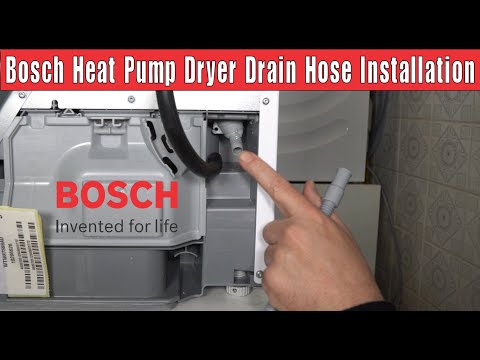 UPDATED - How to Install the Bosch Drain Hose Accessory KitEasy DIY Projects
-
 CRE Error Message on Bosch Dryer? Here’s What It Means and How to Fix ItUnboxingexperience7
-
 Hoe condensatie beheren in Bosch WTU87675NL drogerVraag en Antwoord
More related reviews
-

-
 AEG TR73CB96 SensiDryDryers
-
