-
LatestThe best Washer of 2026
-
 BLACK+DECKER BFLW45M Roomy, efficient front-load washer with practical everyday cycles.
-
 Miele WQ 1000 WPS Nova Premium, feature-rich washer built for convenient everyday laundry.
-
 Miele WWB 380 WCS PowerWash & Steam Premium washer offers efficient cleaning and fabric care.
-
 AEG LR639AD44 6000-serie ProSense Autodose Convenient 9kg washer with automatic dosing and sensing
-
 Siemens WM14N208NL Practical 8kg washer with dependable everyday cycles.
-
 Bosch WAN2827FNL Practical, efficient 8 kg washer for everyday family laundry.
-
-
LatestThe best Washer of 2026
-
 Kapas KPS35-735H2 Compact twin-tub washer for small, hands-on laundry loads.
-
 Comfee CLV09N1AMG Compact washer makes small-apartment laundry convenient.
-
 Giantex EP23113 12 Lbs Compact twin-tub washer for convenient small-space laundry
-
 Midea MLTW09M1BWW washer Compact laundry for apartments and small everyday loads
-
 BLACK+DECKER BPWM09W, 0.9 Cu. Ft. , 6.6 lb. Compact portable washer for small everyday laundry loads
-
-
LatestThe best Dryer of 2026
-
 Miele TED 648 WP EcoSpeed & Wash2Dry Efficient, gentle drying with convenient smart washer pairing.
-
 BLACK+DECKER 4.4 Cu. BDFH44M Compact vented dryer for everyday small-home laundry
-
 BLACK+DECKER 8.0 Cu. BFLD80ME Roomy electric dryer for everyday family laundry.
-
 BLACK+DECKER BCED26 Compact Dryer Space-saving vented drying for small everyday laundry loads.
-
 AEG TR73CB96 SensiDry Gentle, efficient drying with generous family-sized capacity.
-
 AEG TR969M6C AbsoluteCare Plus Gentle, efficient drying for mixed loads and bedding
-
-
LatestThe best Washer-Dryer of 2026
-
 Bosch WNC254A0 Serie 8 Large-capacity washer-dryer with smart features and convenient automatic dosing
-
 Bosch WNA13400NL Space-saving washer-dryer for everyday laundry, smaller drying capacity.
-
 AEG LWR7586CUB DualSense UniversalDose Space-saving washer-dryer with fabric care and pod-friendly dispensing
-
 Bosch WNG254A7NL Spacious washer-dryer convenience, with a modest drying capacity.
-
 AEG LWR9516BN4 9000 Serie SensiDry Space-saving washer-dryer with gentle heat-pump fabric care
-
 Whirlpool FFWDB 964369 WV EE Space-saving washer-dryer with generous washing capacity and quick cycles.
-
Miele WWB 380 WCS PowerWash & Steam review
Miele WWB 380 WCS review: assess its 8kg capacity, PowerWash, SteamCare, energy efficiency and smart features—and whether its premium price is worth it.


 2025-03-11
Summary / TL;DR

The Miele WWB 380 WCS PowerWash & Steam is an 8 kg front-loader with PowerWash, a 49-minute QuickPowerWash option for loads up to 4 kg, and steam functions for refreshing clothes and reducing creases. Its controls are usable without the Miele@home app, which adds remote monitoring and supported controls. The enamelled exterior and stainless-steel drum give it a sturdy, practical design, though its 643 mm depth may require careful space checks.
It has an A energy rating, with label figures of 47 kWh per 100 Eco 40–60 cycles and 48 litres of water per cycle. The capacity suits couples and smaller families, but may be limiting for bulky bedding or larger households. Its main drawback is the premium price: buyers prioritising low cost or a larger drum may find better value among competitors.
If you like this review, you might also like our review on the Miele WQ 1000 WPS Nova or Miele WSB 103 WCS or Miele WSI 863 WCS PowerWash 2.0 & TwinDos.
Introduction
The Miele WWB 380 WCS PowerWash & Steam is a premium front-load washing machine aimed at households that want more than basic wash programmes. Its headline appeal is a mix of Miele’s PowerWash and steam features, with a focus on handling everyday laundry without making each load feel like a project.
That could suit a busy week of work clothes, school uniforms and the odd shirt that needs freshening before morning. Miele washers usually cost more than many mainstream alternatives, so the key question is whether the extra features and long-term build reputation justify the price for your home. This review looks at what the machine offers in daily use, as well as where its strengths may matter less to people who mainly want a straightforward, affordable washing machine.
Related reviews
-
 Samsung WF90F09C4SWashers
-
 Miele WEG 888 WCSWashers
-
 Bosch WGB256AONLWashers
Design and Build Quality
The Miele WWB 380 WCS has the restrained look of a standard white front-loader, but its finish is a step above the thin, easily marked panels found on some budget washers. The enamelled front resists scratches and corrosion and wipes clean easily; a splash of detergent or a dusty handprint usually needs no more than a damp cloth.
Solid, practical construction
The door feels substantial, with a broad glass window that makes it easy to see inside without adding a flashy trim or oversized handle. Inside, the stainless-steel drum gives the main wash area a durable, smooth finish. The door seal and surrounding rim are also worth a quick wipe now and then, especially after washing muddy clothes, as lint and moisture can collect around the edge.
At about 596 mm wide, 850 mm tall and 643 mm deep, it fits the usual 60 cm washer space, but the depth deserves a tape-measure check. Hoses and a little clearance behind the machine can push it farther from the wall, which matters in a narrow utility room or beneath a shallow counter. Overall, the design is clean and sturdy rather than decorative, with the easy-care outer finish doing more for daily use than the understated styling might suggest.
Drum Capacity and Everyday Usability
The 8 kg drum capacity gives this Miele room for a useful mix of everyday laundry without making the washer oversized for a typical household. It suits couples and small families well: a week’s worth of T-shirts, underwear, towels and a few lighter items can often go in together, rather than being split into several small washes.
That 8 kg figure means the weight of dry laundry, not how much the drum can hold by eye. A basket of jeans and sweatshirts reaches the limit faster than a similar-sized pile of thin shirts. And bulky items can fill the drum before they come close to the weight limit, so check the care label and leave room for the load to move. A thick duvet, for example, may need its own wash or a larger-capacity machine.
| Household laundry | How 8 kg works in practice |
|---|---|
| Daily clothes for one or two people | Good room to combine several days of lighter items. |
| Small family’s regular washing | Useful capacity for a mixed load of clothes and towels. |
| Bulky bedding or heavy denim | Check the item’s size and weight; these can take up space quickly. |
For anyone comparing an 8 kg washing machine for a small family, the main everyday benefit is fewer tiny loads without needing to wait until laundry has piled up. The trade-off is that households washing several large bedding items at once may prefer a bigger drum. For routine clothes, towels and school or work outfits, this capacity feels practical rather than excessive.
What's in the Box
In the box, expect the Miele WWB 380 WCS PowerWash & Steam washing machine, its power cable, and the hoses needed for a standard water connection and drainage. The hoses are usually packed with or attached to the appliance, so check around the back before assuming anything is missing. Miele also supplies setup and safety instructions, plus caps for the openings left by the transport bolts.
The transport bolts must be removed before the first wash; keep them somewhere safe in case you move house later. You won’t generally find a stacking kit, floor mat, or detergent included, so budget separately if you need to install a dryer above the washer or want to reduce vibration on a slippery floor. Box contents can vary by country or retailer, so it’s worth checking the delivery listing for your exact model.
Controls and Smart Features
The DirectSensor controls keep the Miele WWB 380 WCS PowerWash & Steam straightforward to operate: choose a programme with the selector, then use the display and sensor buttons to check settings and select available extras. It’s a practical layout for quick loads, and you don’t have to use a phone app just to start a wash.
Clear controls, with useful options close at hand
The display shows the selected programme and cycle information, so you can check your choice before pressing start. Options such as a delayed start are handy if you want a wash to finish nearer the time you get home, rather than sit damp in the drum for hours. The exact extras available depend on the programme, so a setting offered for cottons may not appear for a delicate load.
Miele@home adds app connectivity over your home Wi-Fi. Once the washer is connected, the Miele app can provide appliance status and let you use supported remote-control functions. That’s useful for checking whether a cycle is still running from another room, though setup takes a few steps and the app is an extra convenience, not a requirement for everyday use.
A particularly practical touch is AddLoad. If you spot a stray sock after starting the cycle, you can pause the wash and add it when the machine allows the door to unlock. It won’t override safety limits—for example, the door may stay locked when the water level or temperature makes opening it unsuitable—but it can save a small item from waiting for the next load.
Washing Performance and PowerWash
In everyday use, the Miele WWB 380 WCS PowerWash & Steam does a good job with the sort of laundry that piles up between workdays: T-shirts, school tops and lightly soiled towels. Its PowerWash system sprays wash solution back over the clothes as the drum turns, helping detergent reach the load without relying on a long, water-heavy wash. It’s a practical approach for mixed weekly laundry, though a greasy tea towel or muddy sports kit may still need a pre-treatment.
PowerWash and QuickPowerWash
For a faster turnaround, QuickPowerWash is rated to clean up to 4 kg in 49 minutes. That’s useful for a small load of work shirts or a few items needed for the next morning. The 49-minute figure applies to a suitable load and programme, not a full drum of heavily soiled clothes; choosing extra options or washing tougher fabrics can change the run time.
PowerWash is most convincing on everyday dirt rather than set-in stains. A lunch-smudged cotton top or lightly sweaty gym clothes should be straightforward, while dried grass or oily marks are better treated before washing. The washer offers solid cleaning without making every load a lengthy chore, but it doesn’t remove the need to sort fabrics and match the programme to the job.
Steam Functions and Fabric Care
The SteamCare function is mainly about getting creases out and freshening clothes, rather than replacing a proper wash. Miele says it can reduce ironing time by up to 50%, which is useful for everyday cotton shirts, blouses and school uniforms that come out clean but badly crumpled. It won’t make every shirt ironing-free, but it can take the sharp edge off creases so a quick touch-up is often enough.
There’s also a handy use for clothes that have been worn briefly and don’t need a full wash. A jumper that smells a little like dinner, or a jacket pulled from the back of the wardrobe, may benefit from a steam refresh. That can save an unnecessary wash, though it won’t remove stains or replace detergent when clothes are genuinely dirty. Check the care label first, especially for delicate or dry-clean-only fabrics.
For best results, avoid packing the drum tightly: steam needs room to reach the fabric. And treat the advertised ironing reduction as a helpful guide, not a guarantee. Thick seams and linen can still need a proper press; lighter shirts are more likely to come out noticeably smoother. Used for the right garments, this steam washing machine feature makes laundry day a little less dependent on the ironing board.
Energy and Water Efficiency
The Miele WWB 380 WCS has an A energy rating under the current EU scale. Its label lists 47 kWh per 100 Eco 40–60 cycles and an average of 48 litres of water per cycle. At an electricity rate of 30p per kWh, that works out to about £14.10 for those 100 test cycles, before standing charges.
Those figures are useful for comparing washers, but they’re not a promise for every load. The label test uses the Eco 40–60 programme; a hot wash, a small load or extra options can change consumption. The Eco cycle also takes longer than a quick wash, so it suits laundry you can leave running rather than clothes you need back in a hurry.
For everyday savings, filling the drum sensibly matters more than chasing a particular setting. A full load of towels makes better use of the water and energy than washing a few items on repeat. Miele’s PowerWash system is designed to clean effectively with less water, helping the machine avoid using a large volume just to wet the load. Still, its 48-litre label figure is an average, not a guarantee that every programme will use that amount.
Competitor comparison
Compared with mainstream Bosch Serie 6, AEG 7000 and LG washing machines, the Miele WWB 380 WCS sits at the pricier end of the market. You’re paying more for Miele’s build reputation and a compact set of premium features, rather than simply getting the biggest drum or the longest list of app controls.
| What to compare | Miele WWB 380 WCS | Many similarly priced alternatives |
|---|---|---|
| Load size | 8kg, a practical fit for couples and smaller families | Some models offer 9kg or more, which helps with bulky bedding and larger weekly loads |
| Buying cost | Usually commands a premium | Bosch, LG and Samsung models often cost less or offer a larger capacity for the money |
| Brand emphasis | Build quality and a more premium ownership experience | Competitors may put more emphasis on large capacity, app features or a lower upfront price |
The 8kg capacity is the main point to weigh up against larger rivals. If you regularly wash a king-size duvet or want to get through several loads in one go, a 9kg machine may suit your household better. For the usual mix of clothes, towels and school or work wear, 8kg is plenty, and you avoid paying extra for space you may rarely use.
Miele also makes a stronger case for buyers who plan to keep a washer for years, rather than replace it as soon as a cheaper model starts showing its age. The company says its machines are tested for long-term use, though that testing claim is not the same as a 20-year warranty. A Bosch or LG may be the better value if the purchase price matters most; the Miele is easier to justify if you value its premium construction and are comfortable paying more upfront.
Conclusion
The Miele WWB 380 WCS PowerWash & Steam makes the most sense as a long-term household upgrade, rather than a budget buy. Its 8 kg capacity suits regular family laundry without taking up the space of a larger machine, and the mix of quick-wash and steam options can be handy when the week’s routine gets messy—think a school shirt needed by morning or a lightly worn jumper that just needs freshening up.
The trade-off is the higher purchase price, and 8 kg may feel limiting if you often wash bulky bedding or tackle laundry for a large household. Still, for anyone comparing an energy-efficient 8 kg washing machine with useful fabric-care options, this Miele is a strong choice. It’s best for buyers who value flexible everyday washing and are willing to pay more upfront for a well-equipped machine.
Pros & cons
Pros
- A-rated energy efficiency
- Durable enamel front and steel drum
- QuickPowerWash: 4 kg in 49 minutes
- Steam helps reduce creases and freshen
- AddLoad and useful app connectivity
Cons
- Premium purchase price
- 8 kg may limit bulky or large loads
- 643 mm depth needs careful measuring
- Steam won't remove stains or replace washing
Frequently Asked Questions
The Miele WWB 380 WCS PowerWash & Steam is quite energy efficient, boasting an A energy rating. This means it meets high standards for energy conservation, helping reduce your utility bills over time.
The PowerWash 2.0 technology in the Miele WWB 380 WCS PowerWash & Steam allows for a thorough clean in less time. It features the QuickPowerWash function, which can wash a half-full drum in just 49 minutes, saving water and energy.
The SteamCare feature in the Miele WWB 380 WCS PowerWash & Steam is designed to tackle stubborn stains and reduce wrinkles. It helps lift dirt effectively and saves time on ironing, though it may slightly increase energy consumption.
The CapDosing system in the Miele WWB 380 WCS PowerWash & Steam allows you to use pre-measured capsules for specific fabric care needs, such as delicates or waterproofing. While convenient, these capsules can be more expensive than regular detergent.
The Honeycomb Drum in the Miele WWB 380 WCS PowerWash & Steam creates a thin film of water to cushion your laundry, reducing wear and tear on your clothes. This helps extend the lifespan of your garments.
Yes, the Miele WWB 380 WCS PowerWash & Steam can be controlled remotely using the Miele@home app. This allows you to operate the machine and receive notifications via your smartphone or tablet.
The Miele WWB 380 WCS PowerWash & Steam has a load capacity of 8 kg, making it suitable for handling large loads of laundry efficiently.
The Miele WWB 380 WCS PowerWash & Steam is designed to be water-efficient by using sensors to adjust the water level based on the size of the load. This helps conserve water and reduce utility bills.
The Miele WWB 380 WCS PowerWash & Steam does not have an automatic detergent dosing system like TwinDos. However, it does offer the CapDosing system for specialized detergent capsules.
The Miele WWB 380 WCS PowerWash & Steam has a spin speed of 1400 rpm, which helps effectively remove moisture from your laundry, reducing drying time.
Important
Before buying any product, check all details of this product on the website or in the store where you purchase it. Aspects and specifications mentioned in the text above might differ.
More Miele reviews
Videos
-
-

-

-
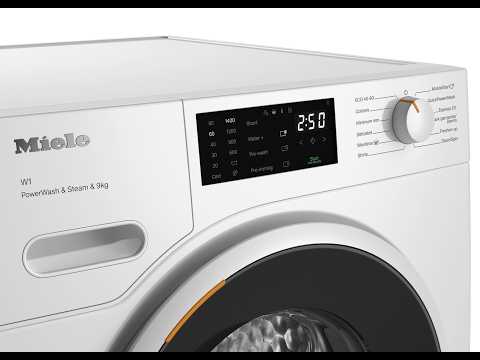 Miele WWD 380 WCS PowerWhash&Steam&9kgMiele Store Deva
-
 Watch THIS Before You Purchase a Miele ApplianceBlvdHome | Boulevard Home
-

More related reviews
-
 Bosch WGG244ZONLWashers
-

-
