-
LatestThe best Washer of 2026
-
 BLACK+DECKER BFLW45M Roomy, efficient front-load washer with practical everyday cycles.
-
 Miele WQ 1000 WPS Nova Premium, feature-rich washer built for convenient everyday laundry.
-
 Miele WWB 380 WCS PowerWash & Steam Premium washer offers efficient cleaning and fabric care.
-
 AEG LR639AD44 6000-serie ProSense Autodose Convenient 9kg washer with automatic dosing and sensing
-
 Siemens WM14N208NL Practical 8kg washer with dependable everyday cycles.
-
 Bosch WAN2827FNL Practical, efficient 8 kg washer for everyday family laundry.
-
-
LatestThe best Washer of 2026
-
 Kapas KPS35-735H2 Compact twin-tub washer for small, hands-on laundry loads.
-
 Comfee CLV09N1AMG Compact washer makes small-apartment laundry convenient.
-
 Giantex EP23113 12 Lbs Compact twin-tub washer for convenient small-space laundry
-
 Midea MLTW09M1BWW washer Compact laundry for apartments and small everyday loads
-
 BLACK+DECKER BPWM09W, 0.9 Cu. Ft. , 6.6 lb. Compact portable washer for small everyday laundry loads
-
-
LatestThe best Dryer of 2026
-
 Miele TED 648 WP EcoSpeed & Wash2Dry Efficient, gentle drying with convenient smart washer pairing.
-
 BLACK+DECKER 4.4 Cu. BDFH44M Compact vented dryer for everyday small-home laundry
-
 BLACK+DECKER 8.0 Cu. BFLD80ME Roomy electric dryer for everyday family laundry.
-
 BLACK+DECKER BCED26 Compact Dryer Space-saving vented drying for small everyday laundry loads.
-
 AEG TR73CB96 SensiDry Gentle, efficient drying with generous family-sized capacity.
-
 AEG TR969M6C AbsoluteCare Plus Gentle, efficient drying for mixed loads and bedding
-
-
LatestThe best Washer-Dryer of 2026
-
 Bosch WNC254A0 Serie 8 Large-capacity washer-dryer with smart features and convenient automatic dosing
-
 Bosch WNA13400NL Space-saving washer-dryer for everyday laundry, smaller drying capacity.
-
 AEG LWR7586CUB DualSense UniversalDose Space-saving washer-dryer with fabric care and pod-friendly dispensing
-
 Bosch WNG254A7NL Spacious washer-dryer convenience, with a modest drying capacity.
-
 AEG LWR9516BN4 9000 Serie SensiDry Space-saving washer-dryer with gentle heat-pump fabric care
-
 Whirlpool FFWDB 964369 WV EE Space-saving washer-dryer with generous washing capacity and quick cycles.
-
Siemens WQ33G2D0 review
Review the Siemens WQ33G2D0 8kg heat pump tumble dryer, covering its programs, energy use, noise, running costs and everyday performance.


 2024-12-02
Summary / TL;DR

The Siemens WQ33G2D0 is an 8 kg heat-pump tumble dryer with sensor-controlled drying and programmes for common loads such as cottons, shirts and towels. Its capacity suits everyday laundry for a small household, while the ventless design can work where external ventilation is unavailable. Heat-pump drying uses relatively low temperatures but can take longer, particularly for thick fabrics or full loads.
The dryer is rated energy class E, with listed consumption of about 142 kWh per 100 cycles, and produces 64 dB of noise. Routine care includes clearing the lint filters and emptying the water tank unless connected to a drain. Overall, it offers straightforward controls and practical capacity, but may be less suitable for households prioritising fast cycles or the highest energy efficiency.
If you like this review, you might also like our review on the Siemens WQ35G2D0NL SelfCleaning or Siemens WQ45G270NL SelfCleaning or Siemens WT43N205NL iQ300.
Introduction
The Siemens WQ33G2D0 is an 8 kg heat pump tumble dryer aimed at households that want to dry everyday laundry without adding a vent hose to the room. That makes it a practical option for a utility room, or a kitchen where the dryer needs to sit close to other appliances. A full load can take care of a week’s towels and clothes for a small family, while the drum size also leaves room for bulky items such as bedding.
Heat pump dryers reuse warm air instead of sending it outside, so they’re often a better fit for homes where ventilation is limited. The trade-off is that drying can take longer than with some conventional dryers, especially when you load it up with thick cottons. For anyone comparing 8 kg heat pump dryers, this Siemens model is worth a closer look as a straightforward everyday appliance rather than a machine built around flashy extras.
Related reviews


Design and Build Quality
The Siemens WQ33G2D0 keeps to a familiar, practical dryer shape: a white cabinet, a large front-loading door and a control panel across the top. Its footprint is about 59.8 cm wide and 61.3 cm deep, with a height of 84.2 cm. That makes it close to standard washing-machine dimensions, though the depth is worth checking against skirting boards, hoses and the space needed for the door to open.
A straightforward fit for a laundry room
The plain white finish is easy to match with most washers and laundry-room cupboards. Siemens gives the front a tidy look rather than adding decorative trim, so it should sit neatly in a utility room or bathroom corner. The door and display are easy to spot at a glance; the trade-off is that the styling feels functional, not especially premium.
At around 48 kg, the cabinet is substantial enough that it won’t feel like a lightweight appliance while you load it. Still, take care when moving it into place, and make sure it stands level. In a narrow laundry alcove, measure the full route in—not just the final gap—since doorways and tight turns can be more awkward than the dryer’s listed dimensions suggest.
| Dimensions (H × W × D) | 84.2 × 59.8 × 61.3 cm |
|---|---|
| Approximate weight | 48 kg |
| Finish | White |
Capacity and Drying Performance
The 8 kg capacity gives this heat-pump dryer room for a typical household load of towels, T-shirts and everyday clothing without needing to split everything into small batches. That figure refers to the dry weight of laundry, though, not how full the drum looks. A bulky load of bath towels can take up more space than its weight suggests, so leave enough room for the laundry to tumble freely.
For everyday drying, autoDry moisture sensing helps prevent clothes from being dried longer than necessary. It checks the remaining moisture in the load and adjusts the cycle, which is useful when drying a mix of lighter tops and heavier trousers. A mixed load can still finish unevenly: thicker waistbands or pockets may feel damp while thin shirts are ready to put away. Separating items by fabric thickness usually gives a more even result.
How much laundry can it handle?
| Load type | Practical fit |
|---|---|
| Everyday clothes | A full household wash can often go in one load, provided the drum is not packed tightly. |
| Towels | Good capacity for a regular towel load; very thick towels may need extra space to tumble freely. |
| Bulky bedding | Large items can fill the drum quickly. Check the care label and avoid forcing bedding into a crowded load. |
As a heat-pump dryer, it dries at lower temperatures than many traditional vented dryers. That gentler approach suits fabrics that can suffer from repeated high heat, but cycles may take longer, especially with dense cottons or a heavily loaded drum. For the best results, spin laundry well in the washing machine first and avoid mixing heavy and lightweight fabrics when you need everything dry at the same time.
Drying Programs and Ease of Use
The autoDry moisture sensors do much of the decision-making for you: they monitor the laundry as it dries and stop the cycle when it reaches the selected dryness level. That’s handy for a mixed basket of everyday clothes, where a fixed timer can leave lighter T-shirts overdry while thicker items are still damp. You can choose a cupboard-dry or iron-dry result, depending on whether you plan to put clothes away or finish them with an iron.
Useful programs for everyday laundry
The program selection covers the usual household loads without making you sift through a long list. Cotton and easy-care cycles handle regular washing, while the mixed-load option is useful for a small basket with different fabric types. There are also dedicated settings for items such as towels, shirts and outdoor clothing, plus a timed warm-air program for laundry that needs a little extra drying.
For example, the shirt program is a practical choice for a few work tops that need to be ready by morning, while the outdoor setting is designed for suitable technical garments that need gentler treatment than a standard cotton cycle. Always check garment labels before drying waterproof or specialist fabrics; a program name alone doesn’t guarantee every item is dryer-safe.
Simple controls, with a little less guesswork
The front display and controls make it fairly straightforward to select a cycle and dryness level, and the remaining-time display helps with planning around the end of a load. The anti-crease option can keep laundry moving intermittently after the cycle finishes, which is useful if you can’t unload it straight away. It won’t replace prompt unloading, though—shirts left sitting for hours may still need a quick press.
Overall, the Siemens WQ33G2D0 keeps its dryer programs practical: sensor-controlled drying reduces the need to estimate cycle times, and the dedicated settings make common jobs easier to choose. The main limitation is that anyone wanting very fine control over specialist fabrics may still need to rely on the care label and manual rather than the program names alone.
Energy Efficiency and Running Costs
The Siemens WQ33G2D0 uses heat-pump technology, which recycles warm air instead of continually heating fresh air. That helps keep electricity use below many traditional condenser dryers, though loads can take longer to dry. Its energy label rates it class E on the current A-to-G scale; that can look modest, but the scale is much stricter than the old A++ ratings, so the two labels aren’t directly comparable.
The label lists consumption at around 142 kWh per 100 cycles. Here’s what that could mean at an electricity rate of 30p per kWh:
| Use | Estimated electricity cost |
|---|---|
| One cycle | About 43p |
| 100 cycles | About £42.60 |
| 160 cycles | About £68.20 |
These are estimates based on the label figure, not a promise for every load. A small, well-spun load may use less; damp towels packed into the drum can take longer and push the cost up. Your tariff matters too, so multiply your price per kWh by roughly 1.42 kWh per cycle for a quick personal estimate. Keeping the filters clear also helps the dryer work efficiently over time.
Noise and Maintenance
The Siemens WQ33G2D0 is rated at 64 dB, so it’s audible during a cycle rather than whisper-quiet. In a laundry room with the door shut, the steady fan and drum sound should be easy to live with; in an open-plan kitchen, you may notice it more during a conversation or while watching TV. A solid, level floor helps limit extra vibration, especially with heavier loads such as towels.
Cleaning and routine care
After drying, clear the lint from the door filter. It’s a quick job, but leaving a thick layer of fluff in place can restrict airflow and make drying take longer. Also empty the condensate tank regularly if the dryer isn’t connected to a drain. That matters most in a busy household, where several loads in a row can fill it sooner than expected.
Every so often, check the lower filter and condenser area for lint, following the manual’s cleaning instructions. Heat-pump dryers depend on clear airflow, so a little upkeep helps the machine work as intended. The routine is straightforward, though it does mean remembering a few small tasks rather than treating the dryer as completely maintenance-free.
What's in the Box
The box is mostly about the appliance itself: the dryer and its installation and operating instructions. There’s no reason to expect extras such as a stacking kit or laundry basket, so check the retailer’s listing if you need accessories for a washer-dryer stack.
The Siemens WQ33G2D0 is a heat-pump dryer, so it doesn’t need an exhaust hose running to a window or wall. It collects moisture as water instead. If you want to send that water straight to a drain rather than empty the tank, confirm whether a drain hose is included with your particular package; retailer bundles can differ.
Competitor comparison
Against similarly priced 8 kg heat pump dryers, the Siemens sits in the practical middle ground: it offers a familiar, straightforward alternative to feature-heavy smart models and pricier premium machines. Its closest comparison is often a Bosch heat pump dryer, since both brands are part of the BSH group. The exact programmes and controls depend on the model, so check the full model number rather than assuming every Bosch is a direct match.
| Alternative | Where it may suit you better | What to weigh up |
|---|---|---|
| Bosch 8 kg heat pump dryer | A good comparison if you want similar mainstream features and a familiar layout. | Compare the exact programme list, price and warranty; brand alone won’t tell you which is better value. |
| Samsung heat pump dryer | Some models add app control and connected-home features, handy if you like checking a cycle from another room. | Those extras vary by model, and may matter little if you mainly use a few everyday drying programmes. |
| Beko heat pump dryer | Often worth checking when the upfront price is the main concern. | Compare the energy label, cycle options and included warranty against the Siemens before choosing on price alone. |
| Miele heat pump dryer | A premium option for buyers willing to spend more for a different level of finish and brand support. | The higher purchase price may be hard to justify if you want a dependable everyday dryer without premium extras. |
The Siemens WQ33G2D0’s 8 kg capacity makes it a like-for-like option for many family households: large enough for a regular wash load, without stepping up to a bulkier model just for occasional bedding. For example, if you usually dry clothes in batches after the weekend wash, comparing the cost of equivalent 8 kg heat pump models is more useful than paying extra for smart features you may rarely open.
Also compare the current energy label and the estimated yearly running cost, not just an older A-rating shown on a retailer page. EU dryer labels have changed, and listings can mix old and new information. A small difference in purchase price can look attractive, but the better buy depends on how often you dry clothes and the cost of electricity where you live.
Conclusion
The Siemens WQ33G2D0 makes most sense as a dependable 8 kg heat pump dryer for households that want everyday laundry handled without paying extra for a long list of premium features. Its size suits a couple or a small family, and it can take the edge off the weekly wash pile, from towels to school clothes.
There is a trade-off: heat pump drying usually takes longer than vented or conventional condenser drying, so it’s less suited to someone who regularly needs a load finished in a hurry. Its energy rating also isn’t among the very best available, which is worth weighing up if you run the dryer almost every day. For more occasional use, or where gentler, lower-temperature drying matters more than speed, it’s a sensible option.
Overall, this is a practical freestanding heat pump tumble dryer rather than a feature-packed showpiece. If you want straightforward drying for a household’s regular laundry and can live with longer cycles, it deserves a place on your shortlist.
Pros & cons
Pros
- Generous 8 kg capacity
- Heat pump needs no exhaust hose
- autoDry moisture sensing
- Useful everyday drying programs
- Lower energy use than conventional dryers
Cons
- Longer cycles, especially for cottons
- Class E efficiency is not top-tier
- Audible at 64 dB
- Filters and condensate tank need upkeep
Frequently Asked Questions
The Siemens WQ33G2D0 dryer has an energy efficiency rating of A++, making it an energy-efficient choice for your laundry needs.
The heat pump technology in the Siemens WQ33G2D0 dryer uses recycled heat to dry clothes, which reduces energy consumption and is gentler on fabrics.
The Siemens WQ33G2D0 dryer has a capacity of 8 kg, suitable for families with up to four people.
Yes, the Siemens WQ33G2D0 dryer features a Silence Program that minimizes noise during operation, making it ideal for homes with laundry rooms near living areas.
The AutoDry function in the Siemens WQ33G2D0 dryer uses sensors to monitor moisture levels and stops the cycle when clothes are perfectly dry, preventing overdrying.
The Siemens WQ33G2D0 dryer offers a Rapid 40 program that can dry a small load in just 40 minutes, ideal for lightweight fabrics.
The SoftDry Drum System in the Siemens WQ33G2D0 dryer creates a cushion of air to protect fabrics during the drying process, reducing wear and tear on clothes.
No, the door swing of the Siemens WQ33G2D0 dryer is not reversible.
Regularly check and clean the lint filter of the Siemens WQ33G2D0 dryer to ensure optimal performance and energy efficiency.
User manuals for the Siemens WQ33G2D0 dryer can be found on the Siemens Home Appliances website or by contacting their customer support.
Important
Before buying any product, check all details of this product on the website or in the store where you purchase it. Aspects and specifications mentioned in the text above might differ.
More Siemens reviews
-
 Siemens EQ300 TF301E09 review
Freshly ground coffee with simple, convenient controls.
Videos
-

-
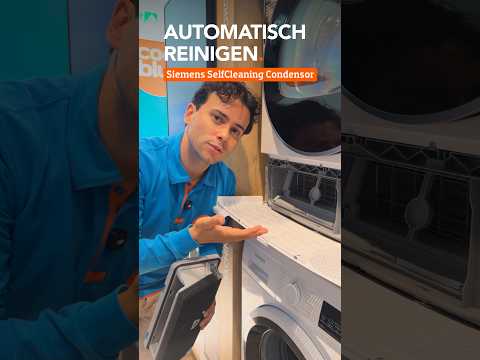 Wat is Siemens selfcleaning condensor bij Siemens wasdrogers?Coolblue Productadvies
-
 Siemens iQ500 - big sudslockMrlaundry101
-
 Care programma Siemens IQ500 opzettencynthia9056
-
 Siemens iq Washing Machine ResetWashing Machine Tips and Help
-
 Siemens Sensoric iQ 300 flashing Key RemovalWashing Machine Tips and Help
More related reviews
-

-
 AEG TR73CB96 SensiDryDryers
-
